Small Business Owner Continuity Plan Example Pdf
A business continuity plan outlines the instructions and procedures a business should follow after some type of disaster. Events like floods, fires, and more can disrupt your ordinary business practices. You need to have a plan in place to handle these situations and effectively get back to work.
You can use a free business continuity plan template to create your own. Give your organization the tools it needs to operate effectively despite any disruptions – you never know when a disaster can strike but you can be prepared.
- What is a Business Continuity Plan?
- When to Use a Business Continuity Plan?
- How to Write a Business Continuity Plan
- Business Continuity Plan Sample
- How Often Should a Business Continuity Plan Be Tested?
- Business Continuity Plan FAQs
What is a Business Continuity Plan?
A business continuity plan is a document that sets forth your organization's plans for dealing with a disaster. These procedures help you to quickly resume business and reduce downtime and lost revenue. It covers important processes like asset protection, human resources issues, and how to deal with business partners.
Other names for a business continuity plan include:
- Disaster Recovery Plan
- Business Contingency Policy
- Business Continuity Procedures
- Disaster Plan
- Continuity of Operations Plan (COOP Plan)
When to Use a Business Continuity Plan?
You want to create a business continuity plan before you actually need it. The point of this document is to be ahead of the game. You do not want to be responding to a disaster without a set plan in place. Business continuity planning is key to a successful response to a disaster.
Once your continuity plan is in place, you may need to use it in disasters such as:
- Fires
- Floods
- Cyberattacks
- Tornados
- Hurricanes
- Major Storms
- Earthquake
- Major IT or internet disruption
A business continuity plan is as crucial to your company as a business plan.
How to Write a Business Continuity Plan
Writing your plan can seem daunting but it does not have to be. With a free business continuity plan template, you can create your document easily. You can even use our document builder to create your plan step-by-step in minutes. Your business continuity plan should include:
Step 1 – Purpose of the plan
The plan should address the scope of its effect. Does the plan cover your entire business? Is it for certain departments?
Your employees and managers need to know how this plan will be applied. It should clearly state over whom the policy applies so everyone knows what is expected of them after a disaster.

Step 2 – Identify Key Business Areas
After a disaster, it will be difficult or impossible to immediately go back to normal. Identify the critical aspects of your business. What do you absolutely need to function? What operations are critical and what can wait until later? What are your main revenue-generating products and services and how would they be impacted in the event you could not deliver these things? Would this significantly impact your revenue or customer base if these things were undeliverable for a period of time?
This section is not about convenience but necessity. Hone in on these critical functions to determine a priority list for your business continuity plan.
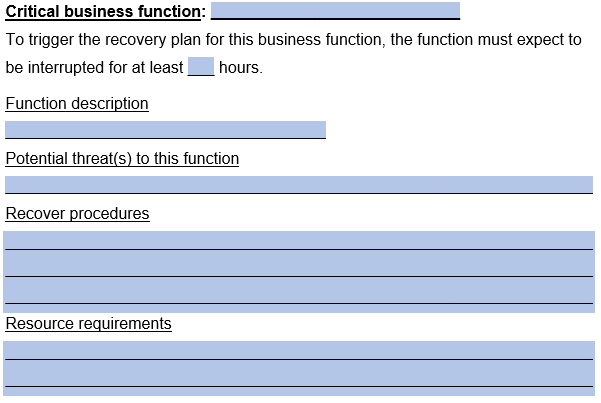
Step 3 – Define the Crisis Team
During an emergency, people need to know who is in charge. There should be no doubt about who will call the shots about important business decisions. These individuals will lead the local response and may be in charge of a wider response strategy outside of the immediate area of the disaster.
The crisis team should be identified by role and title. This ensures that if there is a personnel change everyone stills knows who is in charge. It is critically important to train this team and let them know their roles should a disaster occur.
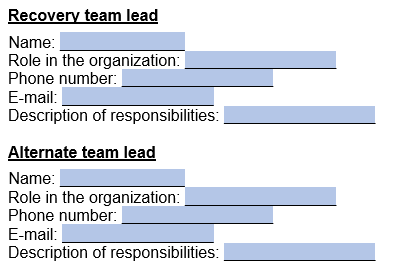
Step 4 – Create a Crisis Communication Plan
In addition to identifying the team in charge, the business continuity plan should lay out how individuals will communicate with one another. Normal methods of communication may be inaccessible. If you are without email, how will you handle communication? How will you handle customer ordering and order fulfillment if your computer system is down?
You should draft sample emergency messages before an actual crisis to test your processes. This could include press releases, interviews, or even social media updates.
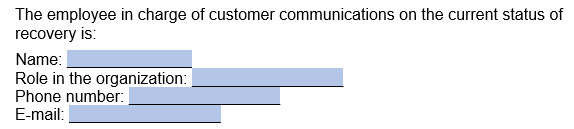
Step 5 – Relocation and Recovery Operations
In the event of a natural disaster or business disruption, you may need to relocate to an alternative worksite. Include the procedure information and what resources will be required.
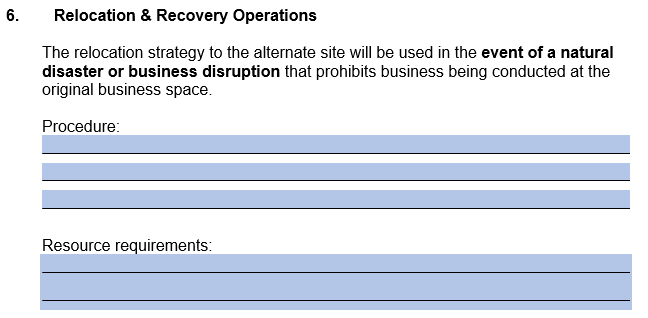
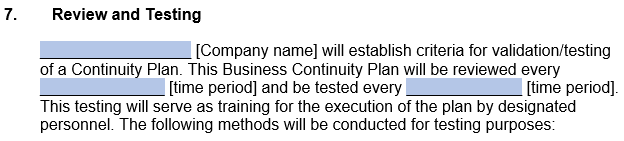
Step 6 – Review and Testing
It's critical to ensure that your business continuity plan is effective and stays up to date. Make sure you include who is in charge of this and how often the plan will be reviewed and tested.
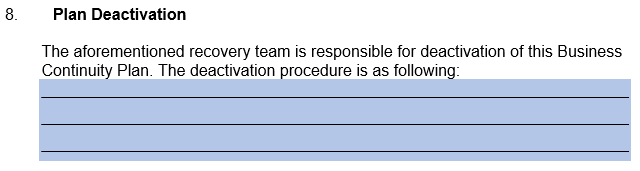
Step 7 – Plan Deactivation
You should also include who is responsible for the deactivation of the business continuity plan and what the procedure is. This ensures that someone can make the decision to get the company back to normal workings.
Business Continuity Plan Sample
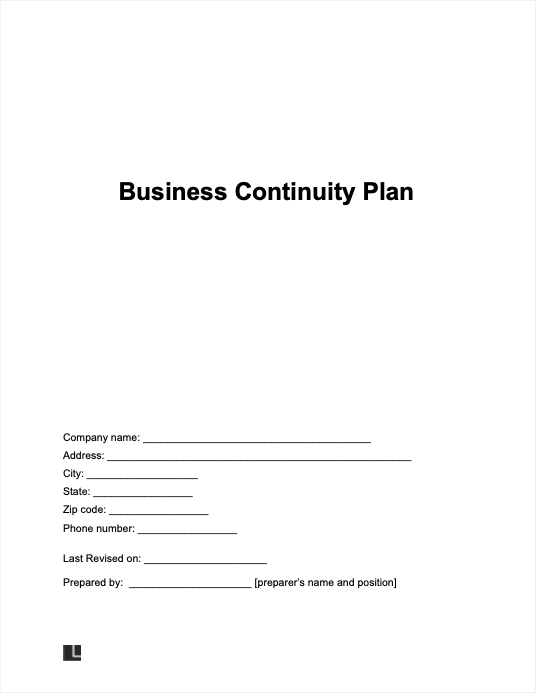
Below you can find a business continuity plan sample to help you start drafting your own plan:
Business Continuity Plan
How Often Should a Business Continuity Plan Be Tested?
A business continuity plan should be constantly reviewed and updated to keep it in line with current business processes. You should look at reviewing your business continuity plan at least twice a year, but this could be more dependent on the size of your business and how often your systems and processes change. For most businesses, you'll want to follow the below sample schedule:
Review Your Checklist – Twice a Year
Twice a year you should review your business continuity plan to ensure it is still relevant to your current business processes and business status. You should also make sure the plan lines up with your business goals and objectives.
Put It Into Practice – Once a Year
Test your plan by putting it into practice. You should make sure that your plan is solid when put into action and the best way to do this is by conducting emergency drills at least once a year. Think of it like practicing fire drills at school.
Formal Review – Every Other Year
Gather relevant teams and stakeholders of your business and sit down to review the business continuity plan every other year. This doesn't have to be overly time-consuming but it should help you identify any weaknesses or red flags in your plan.
Comprehensive Review – Every Other Year
Separate from the formal review, this one takes a full dive into the plan. It should look closely at every aspect and ensure everything is up to date with current business processes.
Mock Recovery Test – Every Two or Three Years
This is an in-depth test of your business continuity plan and is the best way to ensure your plan not only works but doesn't have any potential failings. As this is time-consuming it doesn't have to happen frequently but should ensure that all stakeholders sign off on the continuity plan.
You need to consider all disaster scenarios and if you're able to manage them effectively. Ensure your plan is ready to tackle any difficult or surprising situations.
Business Continuity Plan FAQs
What is the difference between a business continuity plan and a disaster recovery plan?
A disaster recovery plan focuses mainly on the restoration of IT operations and infrastructure following the disaster. It is more limited in scope but is often a part of a larger business continuity plan.
What is the primary goal of business continuity planning?
The primary goal of business continuity planning is to get your business back up and running as quickly as possible. It will help reduce downtime and reduce lost revenue.
What should be included in a business continuity plan?
A business continuity plan should include key sections like:
- Scope of the plan
- Crisis team
- Communication Ssrategies
- Relocation and recovery operations
- Review and testing
- Plan deactivation
What is the purpose of a business continuity plan?
The purpose of a business continuity plan is to minimize disruption to normal business processes in the event of a disaster. It outlines how the organization will deal with a disaster. Business continuity plans help you reduce disruption to your business and reduce lost revenue.
Source: https://legaltemplates.net/form/business-continuity-plan/

Post a Comment for "Small Business Owner Continuity Plan Example Pdf"